
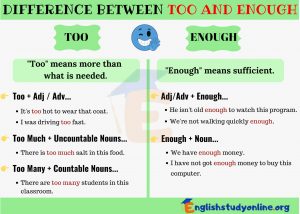
تعد قواعد اللغة الإنجليزية من الأساسيات التي تساعد المتعلّم على التعبير بدقة ووضوح، ومن بين القواعد المهمة التي كثيرًا ما نستخدمها في حياتنا اليومية قاعدة Too و Enough ، تستخدم Too عندما نريد التعبير عن شيء زائد عن الحد أو غير مناسب، بينما تُستخدم Enough للدلالة على الكفاية أو الحد المطلوب من شيء ما ، ولأن الفهم النظري وحده لا يكفي، فإن الأمثلة العملية هي الوسيلة الأفضل لترسيخ القاعدة في الذهن. في هذا المقال، سنستعرض امثله على قاعدة too and enough ، مع مجموعة أمثلة متنوعة توضح طريقة الاستخدام في جمل حقيقية وسياقات مختلفة.
محتويات المقال
امثله على قاعدة too and enough
نماذج امثله على قاعدة too and enough :
أمثلة على Too
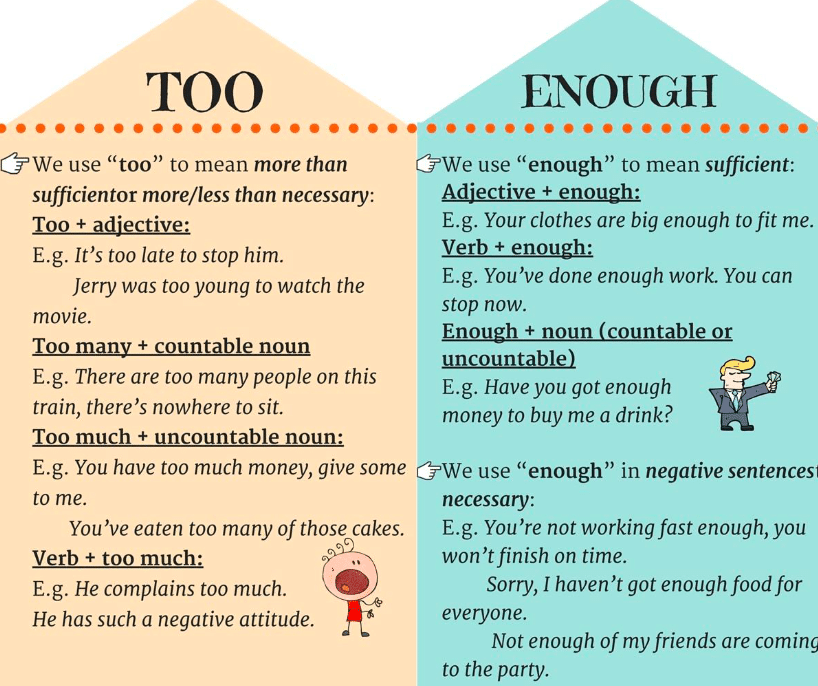
تستخدم Too + صفة (adjective) + to + فعل (verb) للدلالة على أن شيئًا ما أكثر من اللازم أو يتجاوز الحد المطلوب بطريقة سلبية.
أمثلة:
- The coffee is too hot to drink.
- القهوة ساخنة جدًا لدرجة لا يمكن شربها.
- He was too tired to finish his homework.
- كان متعبًا جدًا لدرجة أنه لم يُكمل واجبه.
- This bag is too heavy for me to carry.
- هذه الحقيبة ثقيلة جدًا عليّ.
- It’s too late to call her now.
- الوقت متأخر جدًا لاتصالها الآن.
- The test was too difficult for most students.
- الامتحان كان صعبًا جدًا على أغلب الطلاب.
أمثلة على Enough
تأتي Enough إما بعد الصفة أو قبل الاسم، وتُستخدم للتعبير عن القدر الكافي من شيء ما.
أمثلة مع الأسماء:
- We have enough money to buy the tickets.
- لدينا ما يكفي من المال لشراء التذاكر.
- There isn’t enough time to finish the project.
- لا يوجد وقت كافٍ لإنهاء المشروع.
- She brought enough food for everyone.
- أحضرت طعامًا كافيًا للجميع.
أمثلة مع الصفات:
- She is old enough to drive a car.
- هي كبيرة بما يكفي لقيادة السيارة.
- He is strong enough to lift the box.
- هو قوي بما يكفي لحمل الصندوق.
- The room is quiet enough for studying.
- الغرفة هادئة بما يكفي للدراسة.
قد يهمك :
- امثله على قاعدة adverb clauses
- امثلة على قاعدة adverbs of manner
- امثلة على قاعدة used to
- امثلة على قاعدة will
- امثلة على قاعدة although
- امثلة على قاعدة adverbs of degree
- امثلة على قاعدة as soon as when
تمارين علي too and enough
نماذج تمارين علي too and enough :
التمرين 1: اختر الكلمة الصحيحة (Too / Enough)
ضع الكلمة المناسبة في الفراغ:
- This box is ___ heavy for me to carry.
- She is not tall ___ to reach the top shelf.
- It’s ___ cold to go swimming today.
- Do we have ___ chairs for everyone?
- He is ___ young to drive a car.
- The food isn’t warm ___.
- I don’t have ___ time to finish the report.
- The movie was ___ boring to watch.
الإجابات النموذجية:
- too
- enough
- too
- enough
- too
- enough
- enough
- too
التمرين 2: أعد كتابة الجمل باستخدام Too أو Enough
Example:
The coffee is very hot. I can’t drink it.
The coffee is too hot to drink.
الآن أعد كتابة الجمل التالية:
- The bag is very heavy. I can’t lift it.
- He is very young. He can’t vote.
- She is very tired. She can’t study.
- The soup is not hot. I can’t eat it yet.
- We don’t have much sugar. We can’t bake a cake.
الإجابات النموذجية:
- The bag is too heavy to lift.
- He is too young to vote.
- She is too tired to study.
- The soup is not hot enough to eat yet.
- We don’t have enough sugar to bake a cake.
التمرين 3: ضع “Too” أو “Enough” في الفراغ
- The music was ___ loud. I couldn’t sleep.
- She didn’t speak ___ clearly. I didn’t understand.
- They are ___ busy to join us today.
- I have ___ money to buy the new phone.
- That shirt isn’t big ___. I need a larger size.
الإجابات النموذجية:
- too
- enough
- too
- enough
- enough
التمرين 4: أكمل الجمل باستخدام (too + صفة) أو (صفة + enough)
Example:
The tea is very hot. I can’t drink it.
The tea is too hot to drink.
- The road is very narrow. Two cars can’t pass.
→ The road is _______________________. - She is very clever. She can solve the problem.
→ She is _______________________. - The bag is very small. I can’t fit all my books.
→ The bag is _______________________. - I was very tired. I couldn’t study.
→ I was _______________________. - This book is very easy. You can understand it.
→ The book is _______________________.
الإجابات النموذجية:
- too narrow for two cars to pass.
- clever enough to solve the problem.
- too small to fit all my books.
- too tired to study.
- easy enough to understand.
التمرين 5: صِل كل جملة بجزئها المناسب
الجمل الأولى:
A. He isn’t strong enough
B. The water is too dirty
C. We don’t have enough chairs
D. It’s too late
E. The soup is hot enough
أكمل الجمل:
- to swim in.
- for me to lift.
- to go out now.
- to serve.
- for all the guests.
الإجابات النموذجية:
- A → 2 (He isn’t strong enough to lift.)
- B → 1 (The water is too dirty to swim in.)
- C → 5 (We don’t have enough chairs for all the guests.)
- D → 3 (It’s too late to go out now.)
- E → 4 (The soup is hot enough to serve.)
التمرين 6: اختر الإجابة الصحيحة من بين الأقواس
- That bag is (too / enough) expensive. I can’t buy it.
- We didn’t arrive early (too / enough) to get good seats.
- The weather is not warm (too / enough) for a picnic.
- He’s (too / enough) tired to continue.
- She’s not tall (too / enough) to play basketball.
الإجابات النموذجية:
- too
- enough
- enough
- too
- enough
قاعدة too و To
Too = أيضًا / جدًا / أكثر من اللازم
كلمة “too” (تُنطق: توو) تُستخدم في ثلاث حالات رئيسية:
Too + صفة/حال (adjective/adverb)
تُستخدم للدلالة على أن الشيء أكثر من اللازم (بمعنى سلبي):
أمثلة:
- This coffee is too hot to drink.
هذه القهوة ساخنة جدًا للشرب. - He is too tired to go out.
هو متعب جدًا للخروج.
Too + much/many + اسم
تعني “كمية زائدة عن الحد”:
- There are too many people in the room.
يوجد الكثير جدًا من الأشخاص في الغرفة. - You put too much sugar in the tea.
وضعت الكثير جدًا من السكر في الشاي.
Too = أيضًا (في نهاية الجملة غالبًا)
أمثلة:
- I like pizza. I like pasta too.
أحب البيتزا. وأحب المعكرونة أيضًا. - She is coming to the party too.
هي ستأتي إلى الحفلة أيضًا.
To = حرف جر / جزء من الفعل
كلمة “to” (تُنطق: تو) لها استخدامات كثيرة، أهمها:
To + المصدر (infinitive)
تُستخدم قبل الأفعال في صيغة المصدر:
أمثلة:
- I want to go home.
أريد أن أذهب إلى المنزل. - She needs to study for the exam.
هي بحاجة للدراسة من أجل الامتحان.
To = حرف جر (preposition)
للدلالة على الاتجاه أو الغرض أو المكان:
أمثلة:
- I’m going to school.
أنا ذاهب إلى المدرسة. - This gift is to my friend.
هذه الهدية لصديقي.
شرح قاعدة too too much too many enough
Too much + اسم لا يُعد (Uncountable noun)
يُستخدم مع أشياء لا يمكن عدّها مثل: water, sugar, noise, time.
مثال:
- You put too much sugar in my tea.
وضعت الكثير جدًا من السكر في شايي. - There is too much noise here.
هناك الكثير جدًا من الضجيج هنا.
Too many + اسم يُعد (Countable noun)
يستخدم مع الأسماء القابلة للعد مثل: people, cars, books.
مثال:
- There are too many people in the room.
يوجد عدد كبير جدًا من الأشخاص في الغرفة.
Enough + اسم
(تأتي “enough” قبل الاسم)
مثال:
- We have enough money to travel.
لدينا ما يكفي من المال للسفر. - There isn’t enough food for everyone.
لا يوجد طعام كافٍ للجميع.
امثله على enough
أمثلة على “Enough” مع الصفات (Adjective + enough)
في هذا الاستخدام، تأتي “enough” بعد الصفة:
- She is old enough to drive a car.
إنها كبيرة بما يكفي لقيادة السيارة. - This room is quiet enough for studying.
هذه الغرفة هادئة بما يكفي للدراسة. - He is not strong enough to lift the box.
هو ليس قويًا بما يكفي لحمل الصندوق. - The soup isn’t hot enough.
الحساء ليس ساخنًا بما فيه الكفاية. - Are you brave enough to try?
هل أنت شجاع بما يكفي لتجرب؟
أمثلة على “Enough” مع الأسماء (Enough + noun)
في هذا الاستخدام، تأتي “enough” قبل الاسم:
- We have enough time to finish the project.
لدينا وقت كافٍ لإنهاء المشروع. - There isn’t enough food for everyone.
لا يوجد طعام كافٍ للجميع. - She has enough money to buy the dress.
لديها ما يكفي من المال لشراء الفستان. - Do we have enough chairs for the guests?
هل لدينا كراسي كافية للضيوف؟ - They didn’t get enough sleep last night.
لم يحصلوا على قسط كافٍ من النوم الليلة الماضية.
أمثلة على “Enough” مع الأفعال (Verb + enough)
هنا تعني أن الفعل حدث بدرجة كافية:
- He didn’t run fast enough to win.
لم يركض بسرعة كافية ليفوز. - She studied hard enough to pass the exam.
درست بجد بما يكفي لتنجح في الامتحان.